
Uniform garage dimensions
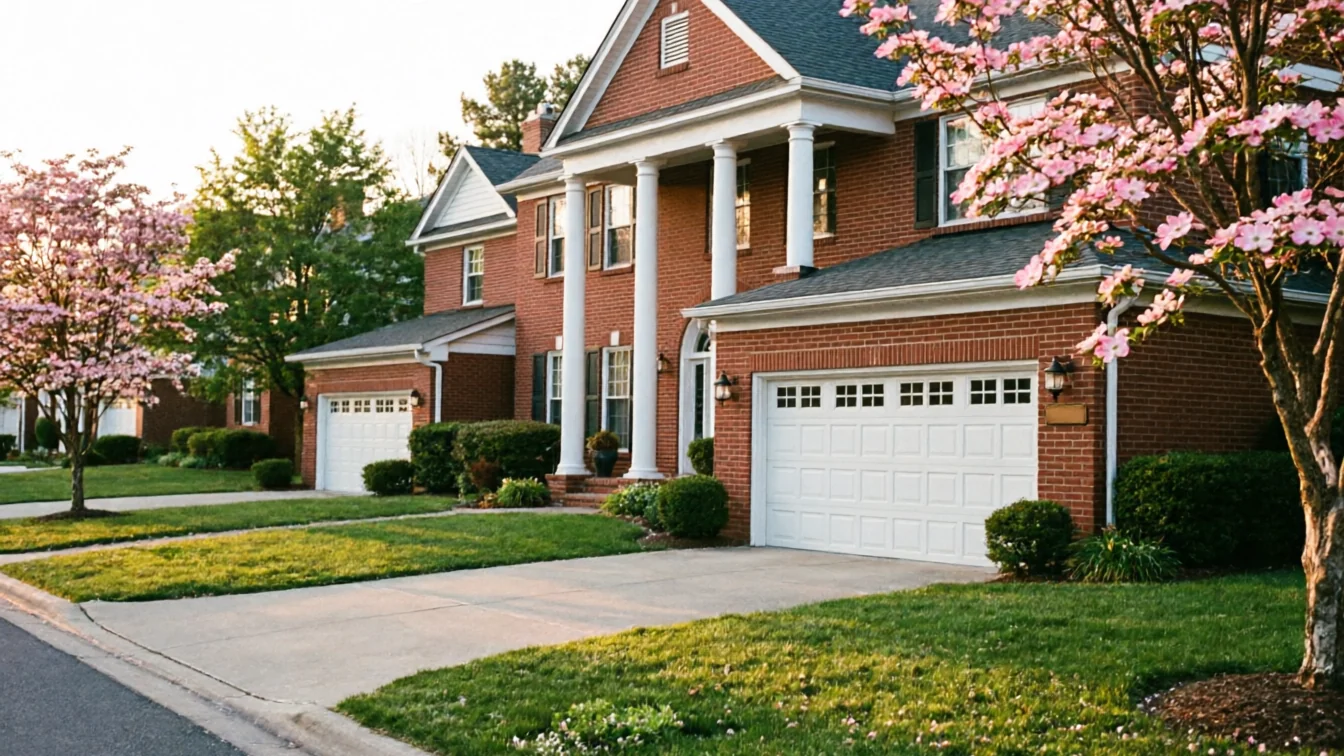
A town this size doesn't have the mixed housing stock you'd find in a bigger market; most garages were built to one set of dimensions and one set of assumptions about what a door should be.
Lancaster, Richmond
Lancaster, KY has about 1,477 households and houses mostly built around 1969. Richmond Garage Door Pros installs doors sized for that original construction.
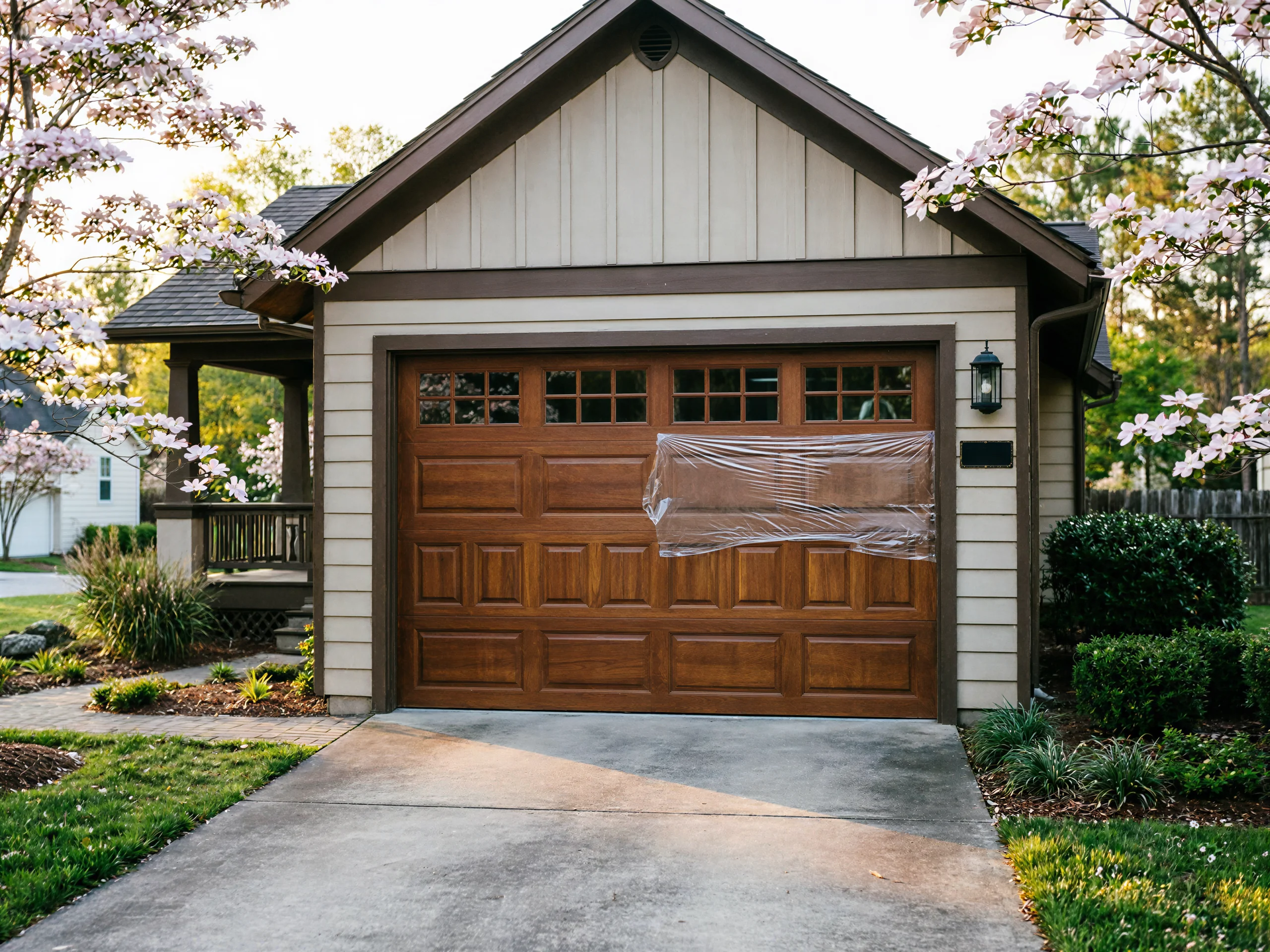
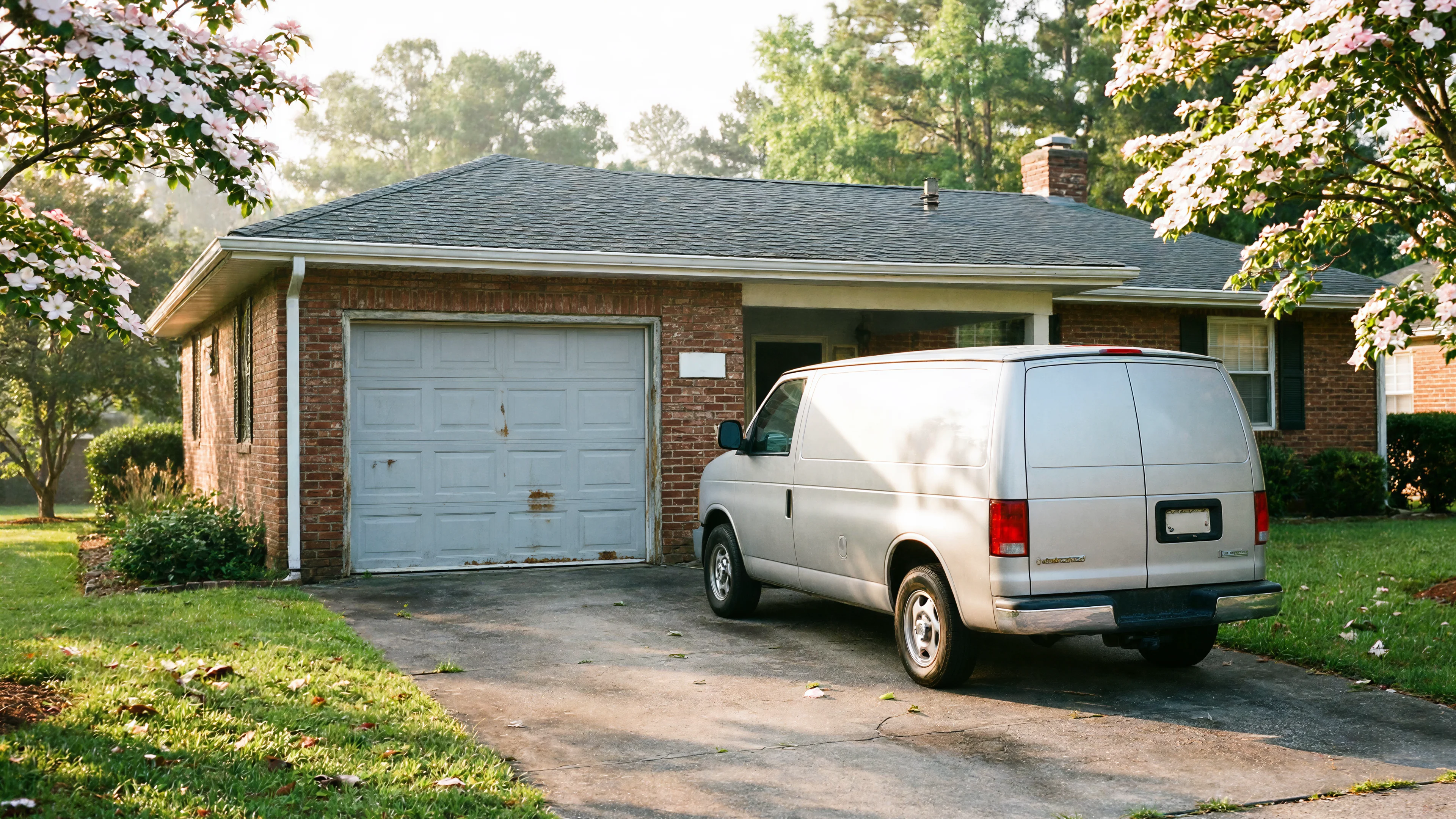
Watch-outs
Lancaster is a small town - about 1,477 households, not a sprawling market, which means the installation jobs we see here aren't random. They cluster around the same few building eras and the same handful of door openings that got framed in the late 1960s and never changed since.
A town this size doesn't have the mixed housing stock you'd find in a bigger market; most garages were built to one set of dimensions and one set of assumptions about what a door should be.
That consistency is actually useful. It means when we quote a new installation here, we're usually working against a known opening size and a known wall depth, not guessing. The complication isn't variety - it's age.
A door opening framed in 1969 doesn't always match the stock sizes that current manufacturers build to, so a straight swap sometimes needs minor jamb or header work before the new door goes in square.
DIY or pro
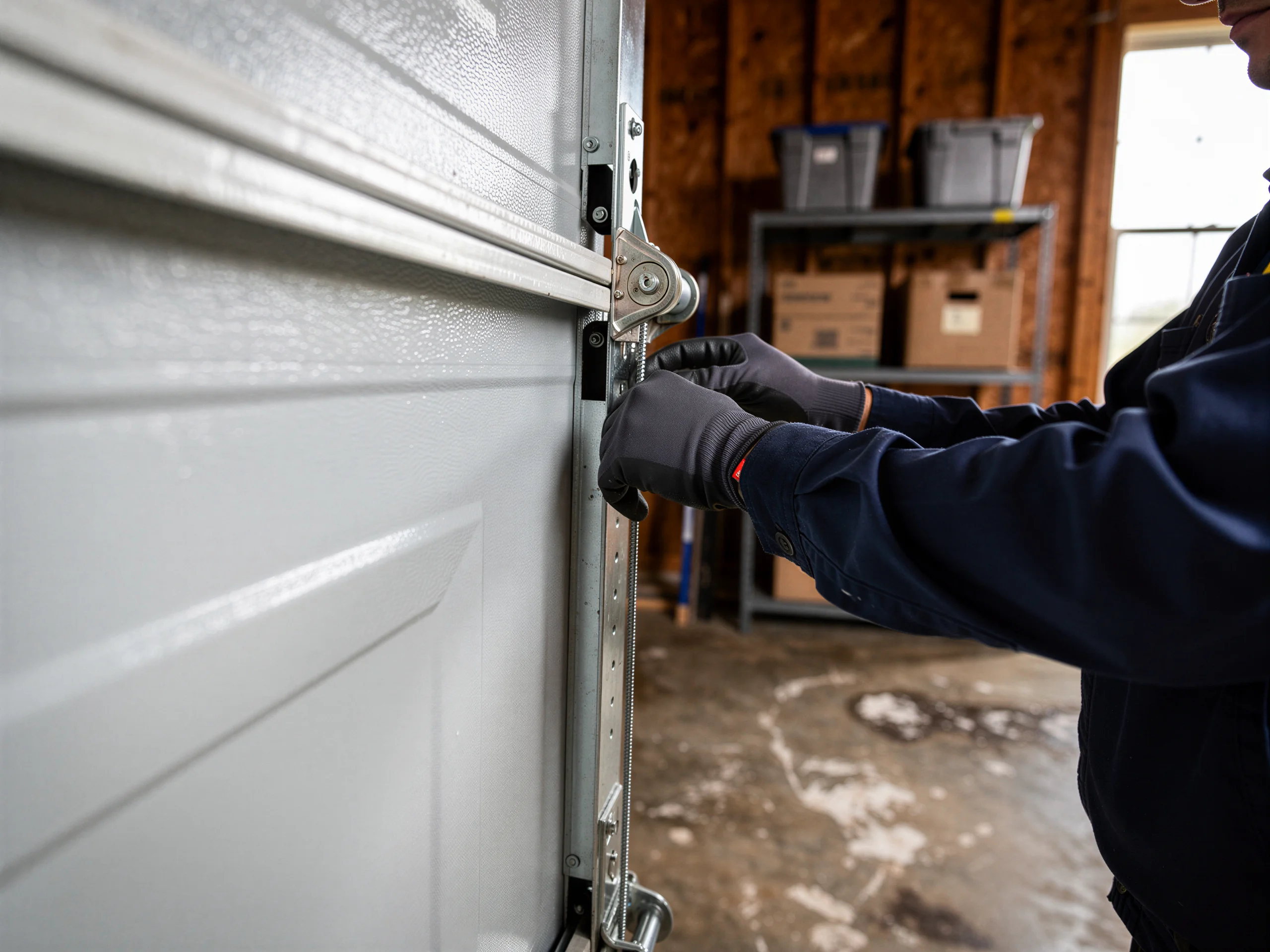
A lot of homeowners look at a new garage door install and figure it's a weekend job - unbolt the old one, bolt on the new one. The door panels themselves aren't the hard part. The spring system is. A torsion spring under tension can put someone in the hospital, and on a house built around 1969 you're often dealing with original track and hardware that wasn't engineered to today's door weights. We're not going to tell you it can't be done by a determined homeowner with the right tools. We will tell you that pairing a new door to old track, old header framing, and a cold-climate opener setup is where most of the mistakes happen, and those mistakes are expensive to undo. If you're set on doing some of it yourself, the panels and opener swap are reasonable; spring and track work isn't.
Local causes
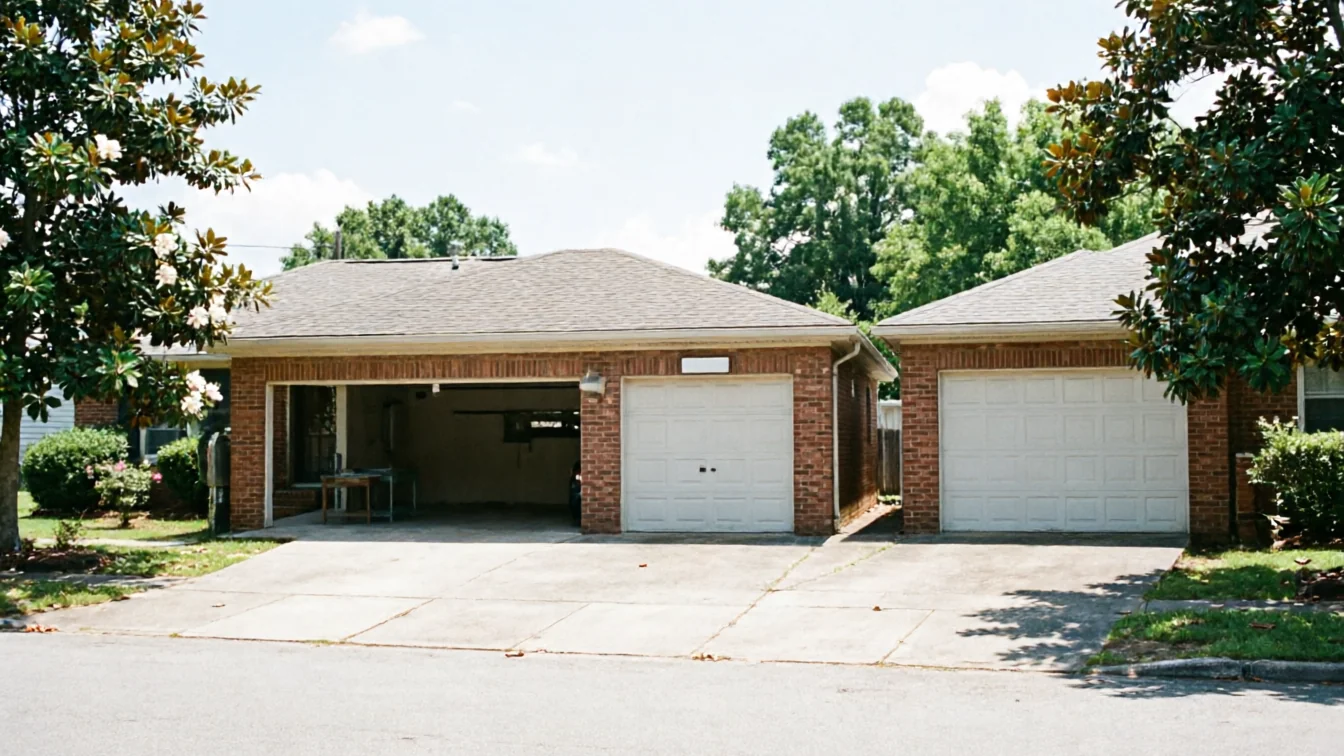
The driving factor in Lancaster is the build year. With the local housing stock centered around 1969, most garages were framed for lighter, single-layer doors with less insulation than what's standard now. That era also predates the kind of wind and thermal bracing that current codes assume, which matters because this area sits in a cold, severe winter climate zone. Single-layer steel doors from that period don't hold up well to repeated freeze-thaw cycling on the hardware - hinges and rollers corrode faster, and the thin panel steel dents and buckles where a newer insulated door would flex and recover. None of this is unique to one house; it's the pattern across a town where most construction happened in a tight 20-30 year window, per F1 and F2.
Warning signs
On a 1969-era house, the tell isn't always a door that won't open. More often it's a door that opens unevenly, drags on one side, or lets a visible gap of daylight along the bottom even when closed.
That's usually the original track geometry fighting a door that's been adjusted and readjusted over decades rather than replaced. In a cold climate, you'll also see it as a door that's noticeably colder to the touch than the rest of the garage wall, or frost forming on the inside panel - a sign the door has no real insulation value left, if it ever had much.
Homeowners sometimes mistake this for an opener problem and replace the opener first, which doesn't fix a door that's structurally and thermally past its working life.
On the truck
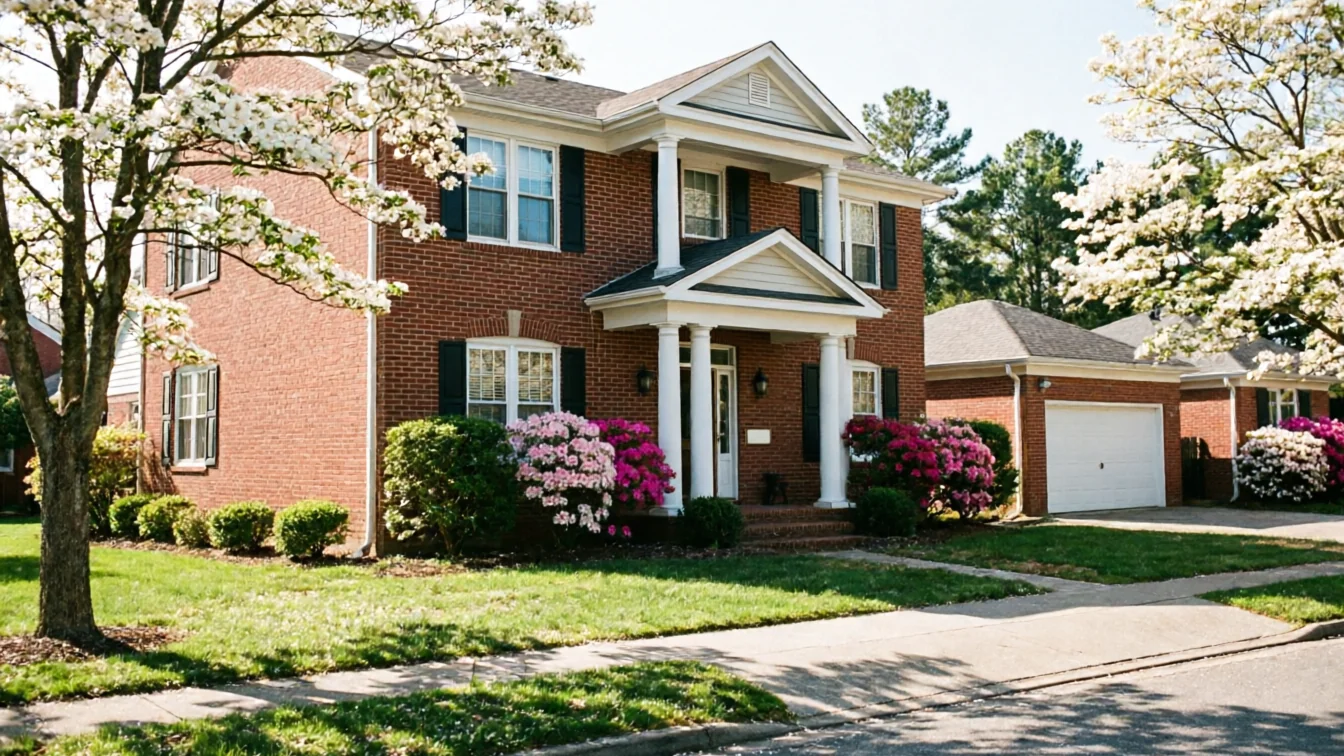
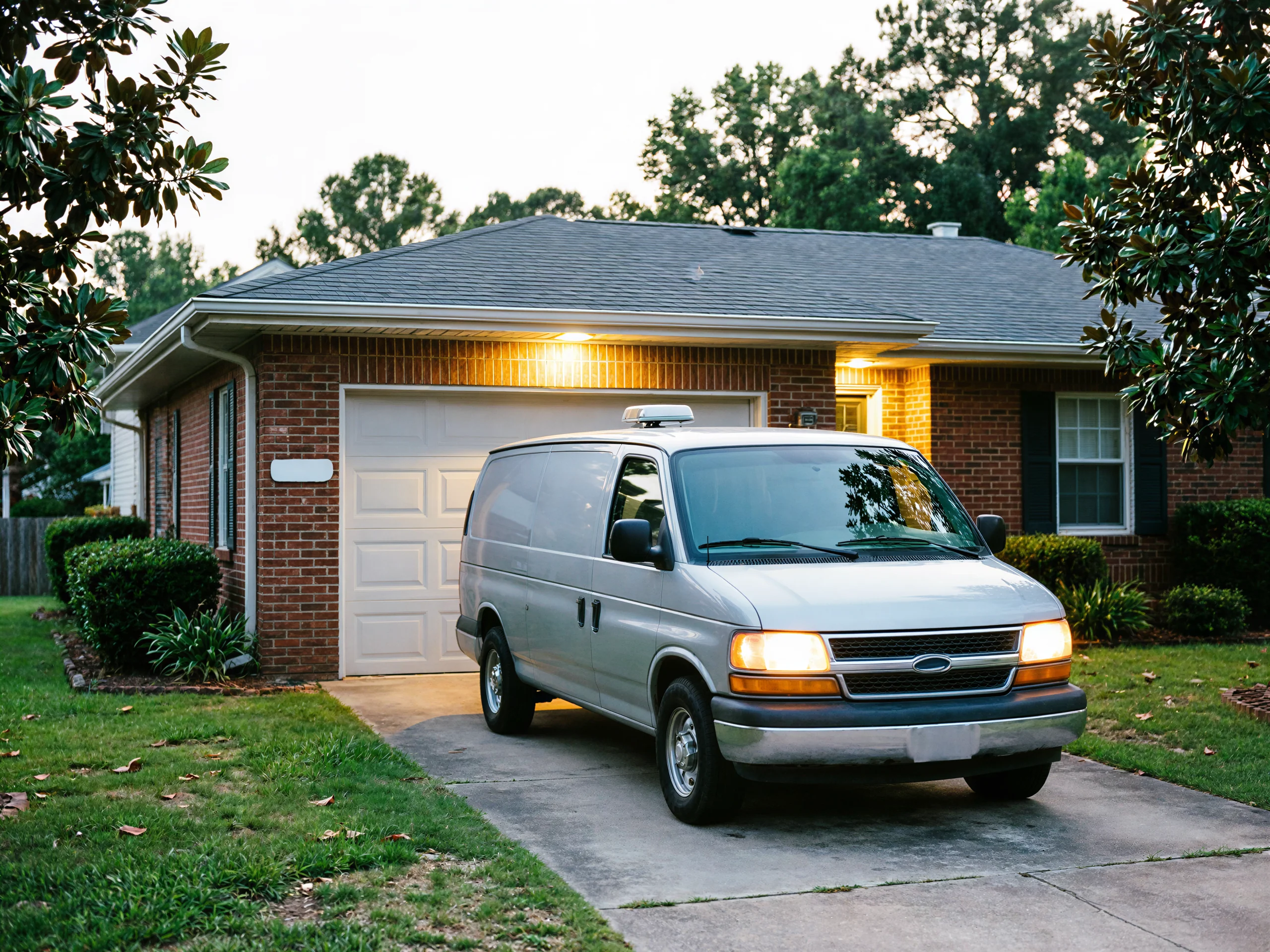
Because so much of Lancaster's housing sits in that same 1960s-70s build window, we carry stock sized for the openings and track configurations most common to it. We travel from Richmond - about 17 miles out - so we build the parts list before we load the truck rather than guessing on site. That said, we're honest about limits: double-wide doors or custom insulated panels in less common sizes sometimes need an order lead time we can't shortcut. If your opening is standard for the era, we can usually turn an installation around in a single visit; if it's an oddball size, we'll tell you that up front rather than promise a date we can't hit.
Downtime
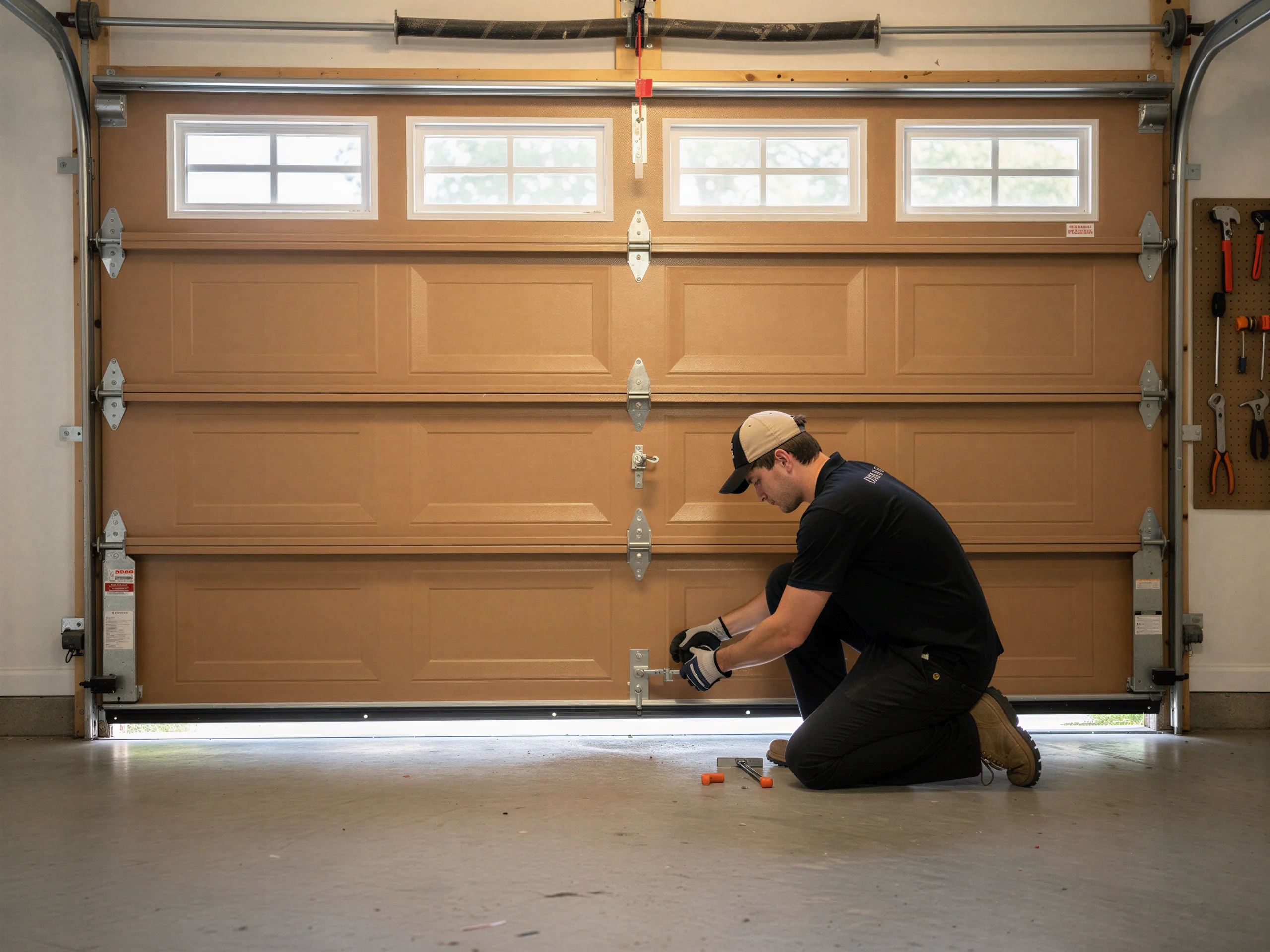
A standard single or double door swap on a typical Lancaster opening is usually a same-day job once we're on site - the old door comes out, the new one goes in, and the opener gets paired, all in one visit. Where it stretches out is when the header or jamb needs rework to square up an opening that's shifted over 50-plus years, or when a non-standard size has to be special-ordered. We won't leave an opening uncovered overnight without a plan; if a job runs long, we talk through that before we start, not after the old door is already off the hinges.
Questions
Houses in Lancaster mostly went up around 1969, before today's standard door sizing and bracing assumptions existed. Framing settles over 50-plus years too, so an opening that was square in 1969 may be slightly out now. We measure before quoting so there are no surprises.
No. We work out of Richmond, about 17 miles away, and travel to Lancaster for installs. We stock parts common to this area's housing stock before we head out so the trip isn't wasted on a wrong-size door.
Given the cold, severe winter conditions this area sits in, yes - original single-layer steel doors from the 1960s-70s building era lose heat and take a beating on hardware from freeze-thaw cycling. An insulated replacement holds up better through the winters here.
Sometimes, but on an original 1969-era door the opener often isn't the real problem - a warped panel or worn track is. Replacing the opener on a structurally tired door just delays the bigger job and wastes the opener's cost.
Explore more
Ready when you are
Richmond Garage Door Pros repairs and installs garage doors, springs and openers in Richmond, KY and the surrounding area.