Blog
When a Richmond Garage Door From the 60s or 70s Is Worth Repairing
A Richmond, KY guide to deciding whether a 1960s-70s garage door is worth repairing, based on local housing age, climate, and household income data.
The Seasonal Bit
Richmond sits in a cold-climate band severe enough to matter for a door that's been hanging on the same hardware since the Johnson administration. Most of the housing stock here went up between 1959 and 1988, with the median landing around 1971, and a lot of those original torsion springs and track sections are still doing the job they were sized for fifty-some years ago. Cold does two things to that kind of setup: it stiffens whatever grease is left in the rollers and hinges, and it changes how much the spring has to work to lift the same weight of door. A spring that was fine in July can bind, chatter, or snap outright in January once the steel contracts. If your door has started groaning on the first cold mornings, that's not age alone talking - that's an older spring meeting a Richmond winter it wasn't greased for recently. This is also when a marginal opener motor gets asked to do more work than it should, which is its own kind of warning sign worth paying attention to before it quits mid-lift.
What You Pay
We're not going to put a number here that we can't back up - we don't have a posted price list to point to, and quoting one without a look at the door would be a guess dressed up as a fact. What we can say is how the math tends to run. Across the service area, median household income sits at $51,139, and of the 16,654 households here, only 6,658 are owner-occupied houses - meaning most repair-or-replace decisions fall on someone paying out of pocket, not a property manager spreading the cost. That changes the calculation. A repair that swaps a spring, a cable, or a bent roller on hardware that's otherwise sound is almost always the cheaper road and the one that makes sense on a tight household budget. Where it stops making sense is when the repairs start stacking - spring, then opener, then track - inside the same year. At that point you're paying for a door in installments instead of once, and a straight replacement starts to look like the better use of the same money.
What Local Conditions Do
The combination that matters in Richmond is specific: a cold-severe climate paired with a door built for a different era of hardware. Doors from the 1959-1988 window, which covers most of what's out there across the four older sections of the service area, were built with steel and spring tension calculated for the standard panel weights of the time - lighter insulation, lighter skins. Decades of winter cycling on that same spring steel wears it unevenly, and you'll often see one side of a torsion bar sagging before the other, which shows up as a door that racks or binds on one track instead of lifting square. Rust along the bottom track channel is the other local tell - condensation inside an unheated garage freezes and thaws against the rail all winter, and over enough seasons that pits the metal where rollers ride. None of that is unique to one house; it's the predictable result of this housing stock meeting this climate for fifty-plus years. It's also exactly the kind of wear that's cheap to catch early and expensive to catch late.
The Problem
Here's the actual question: is the door worth fixing, or is it done. If the frame is still square, the panels aren't rotted or caved at the bottom, and what's failing is hardware - a spring, a cable, a roller, a section of track - that's a repair, and on a door from this era it's usually a straightforward one because the mechanics haven't changed that much. Where we tell people to stop pouring money in: when the bottom panel has rusted through from sitting in meltwater, when the frame itself has racked out of square, or when you're on your second or third hardware failure in under two years. At that point the door is asking for a replacement, not another patch. One honest limitation - we can't make that call from a phone description. A door that sounds fine can have a cracked panel seam you won't see until someone's standing in front of it, and a door that sounds bad might just need one part. It takes a look.
Questions
Common questions
How old does a garage door have to be before it's not worth fixing anymore?
Age by itself isn't the test - a 1971-built door with sound panels and a fresh spring can outlast a ten-year-old door that's been neglected. What matters is condition: squared frame, intact bottom panel, and whether you've already replaced two or three major parts recently. Stacked repairs in a short span are the real signal to stop and replace instead.
Why does my older door act up more in winter here?
Richmond's winters sit in a climate band classed as severe-cold, and a lot of the doors here date to the 1960s and 70s, with spring hardware that's been cycling through fifty-plus winters. Cold stiffens old lubricant and changes how much the spring has to flex to lift the door, which is why problems tend to surface in the first hard cold snap rather than mid-summer.
Is it cheaper to repair or replace an older door?
We don't quote pricing without seeing the door, but the general pattern holds across the service area: a single hardware fix on an otherwise sound door is cheaper than replacement. Once you're replacing a second or third major part within a year or two, the repairs have likely added up to more than a new door would have cost.
Recommendation
You Might Also Like
More garage door guides for Richmond homeowners.
Openers and Power Cuts in Richmond Homes
Richmond homes built 1959-1988 run openers that fail hard in winter power cuts.
Read guide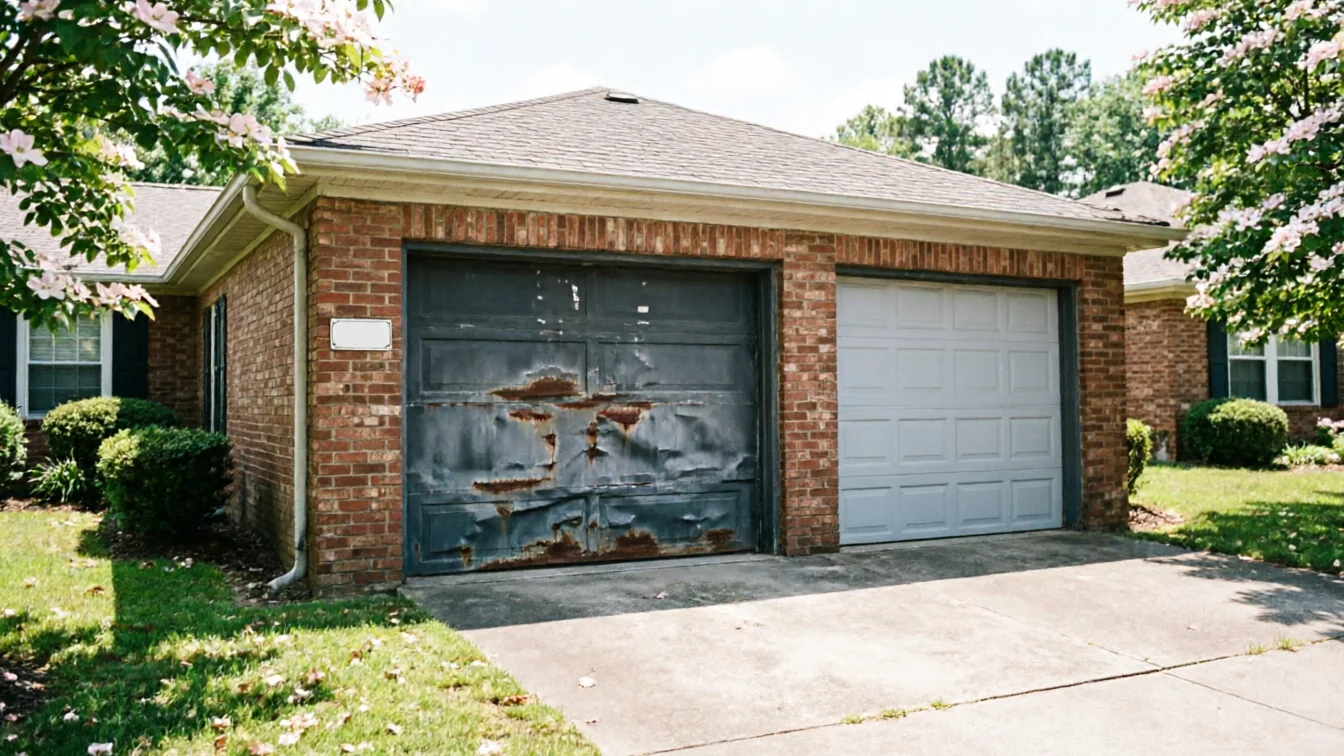
What a Service Call Actually Covers in Richmond
Richmond's housing stock runs 1959-1988 with a severe cold climate band.
Read guide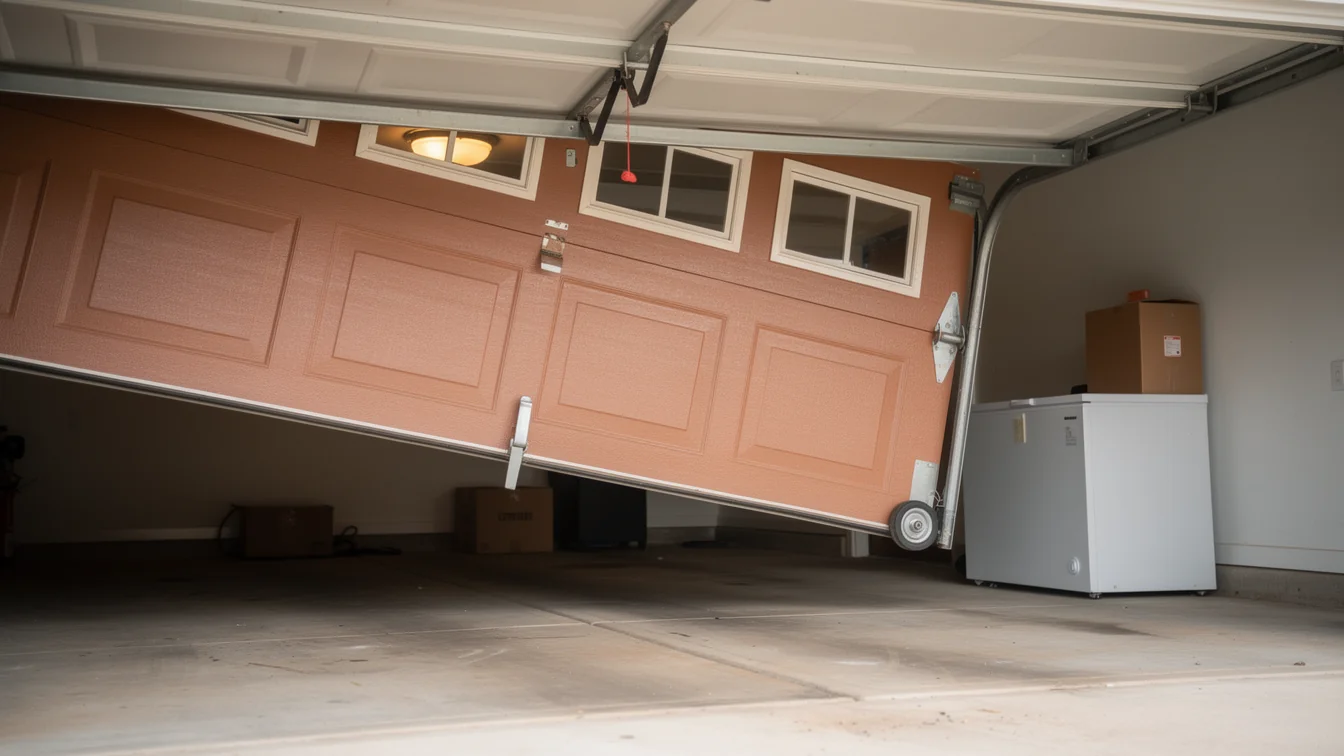
Why Richmond's Older Housing Stock Changes the Garage Door Job
Richmond's housing mostly went up between 1959 and 1988, before modern insulation codes.
Read guideReady when you are
Need a garage door sorted in Richmond?
Richmond Garage Door Pros repairs and installs garage doors, springs and openers in Richmond, KY and the surrounding area.