Pre-loaded truck by phone
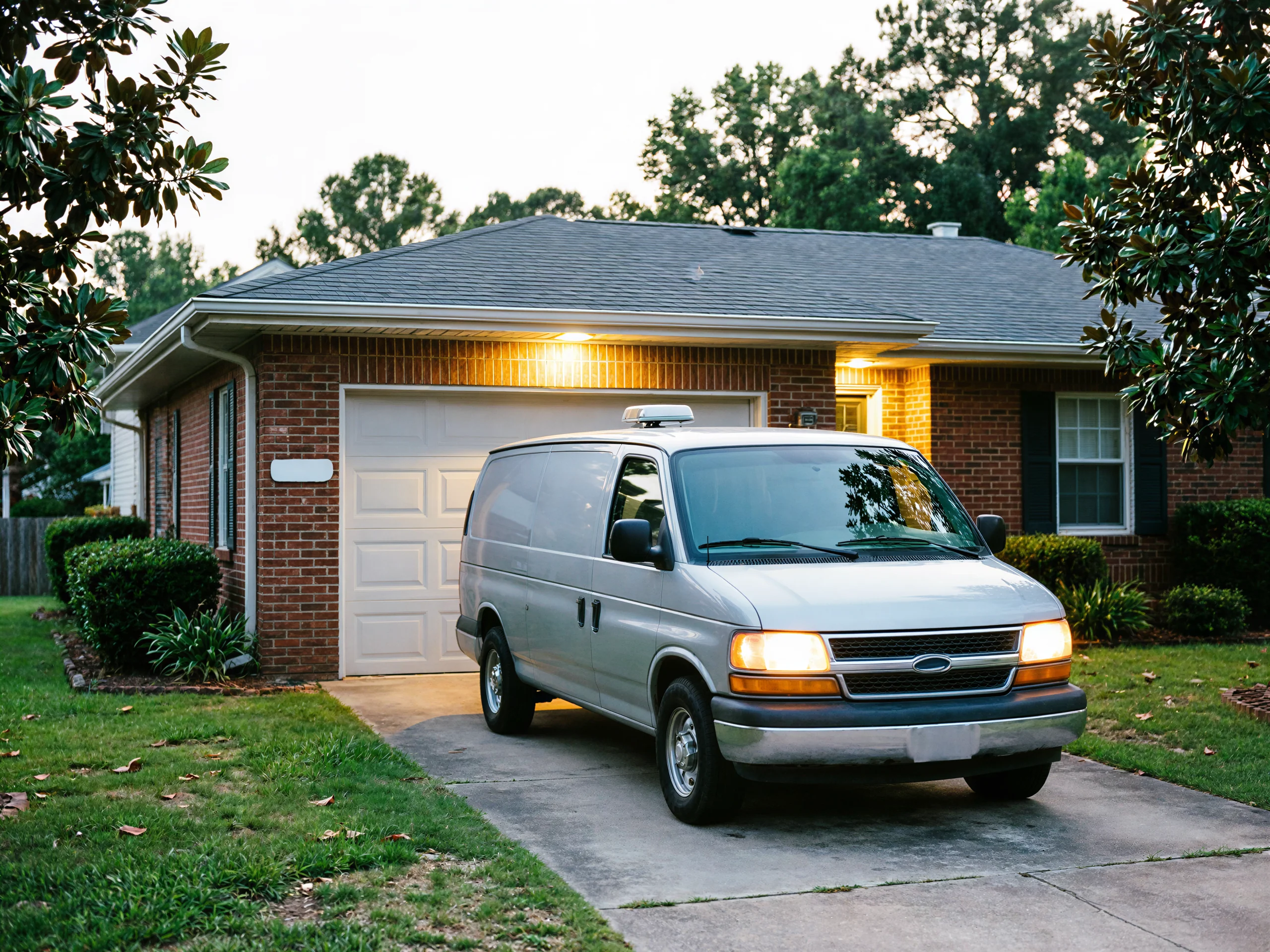
That means we load the truck for the job we expect before we leave, based on what you tell us on the phone: spring size, opener age, whether the door is binding on one side or won't move at all.
Lancaster, Richmond
Garage door repair and service for Lancaster, KY, 17 miles from our Richmond shop. Built for 1960s-70s doors and the cold-weather faults that come with them.
Watch-outs
Lancaster sits 17 miles from our shop in Richmond, and that distance shapes how a call here actually works. We're not running a truck past your house twice a day the way we might in Richmond proper - a job in Lancaster gets scheduled as a trip, not a drop-in.
That means we load the truck for the job we expect before we leave, based on what you tell us on the phone: spring size, opener age, whether the door is binding on one side or won't move at all.
It also means we're not the outfit to call if you just want someone to "take a look" with no clear problem - tell us what the door is doing and we'll come prepared to fix it, not diagnose it twice.
Lancaster is a smaller place than Richmond, with roughly 1,477 households, and the housing here runs about the same age as the rest of our service area - most of it built around 1969. That's useful to know before the truck leaves, because it tells us what kind of spring and track system we're probably dealing with before we ever see the door.
DIY or pro
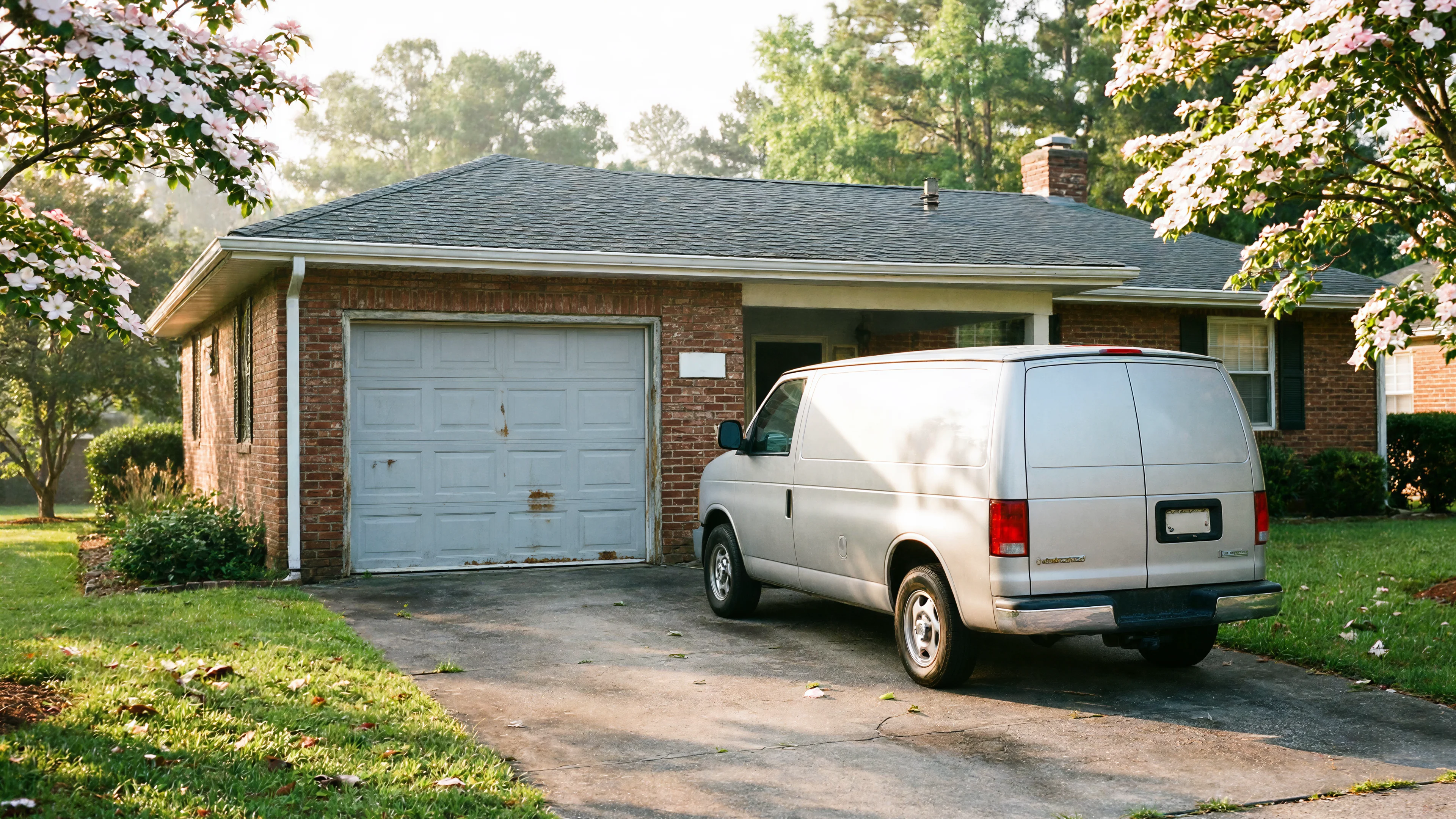
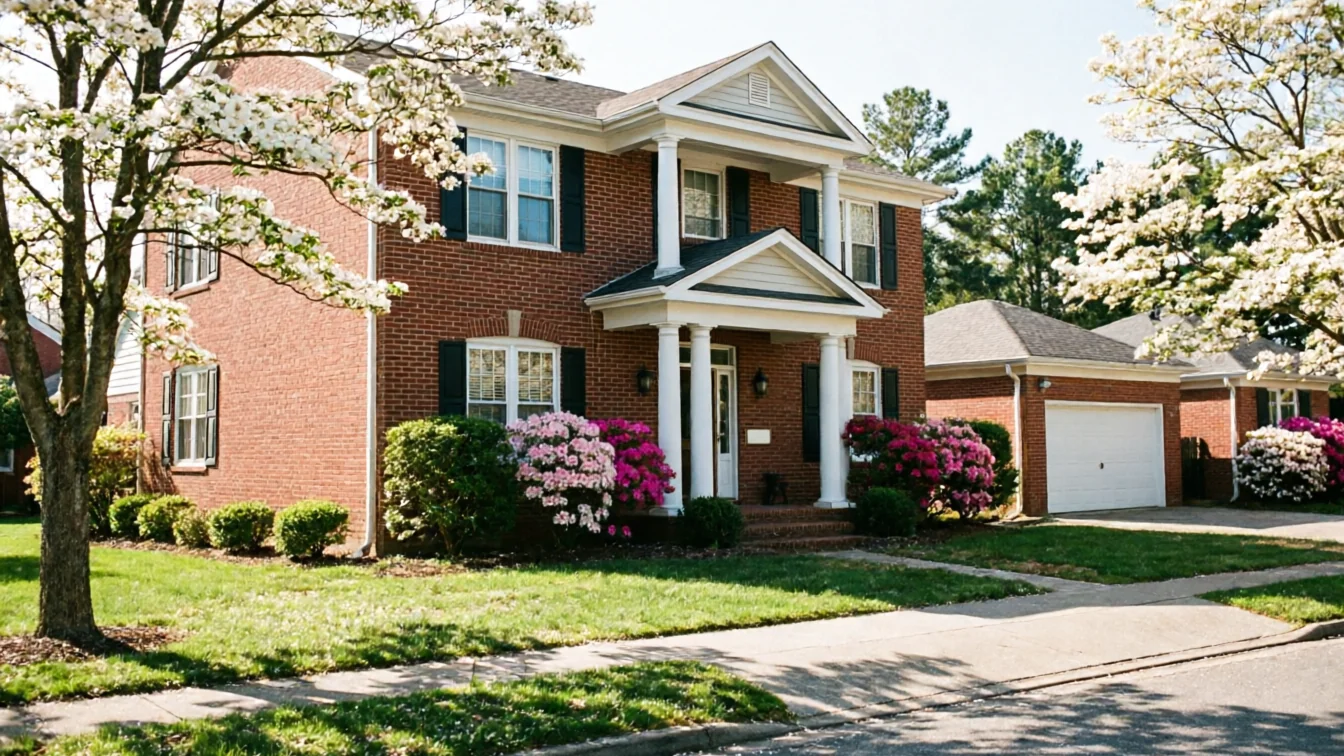
A lot of the doors in Lancaster are original to houses built in the late 1960s, which means torsion hardware that's been doing its job for over fifty years with maybe one spring replacement in its life, if that.
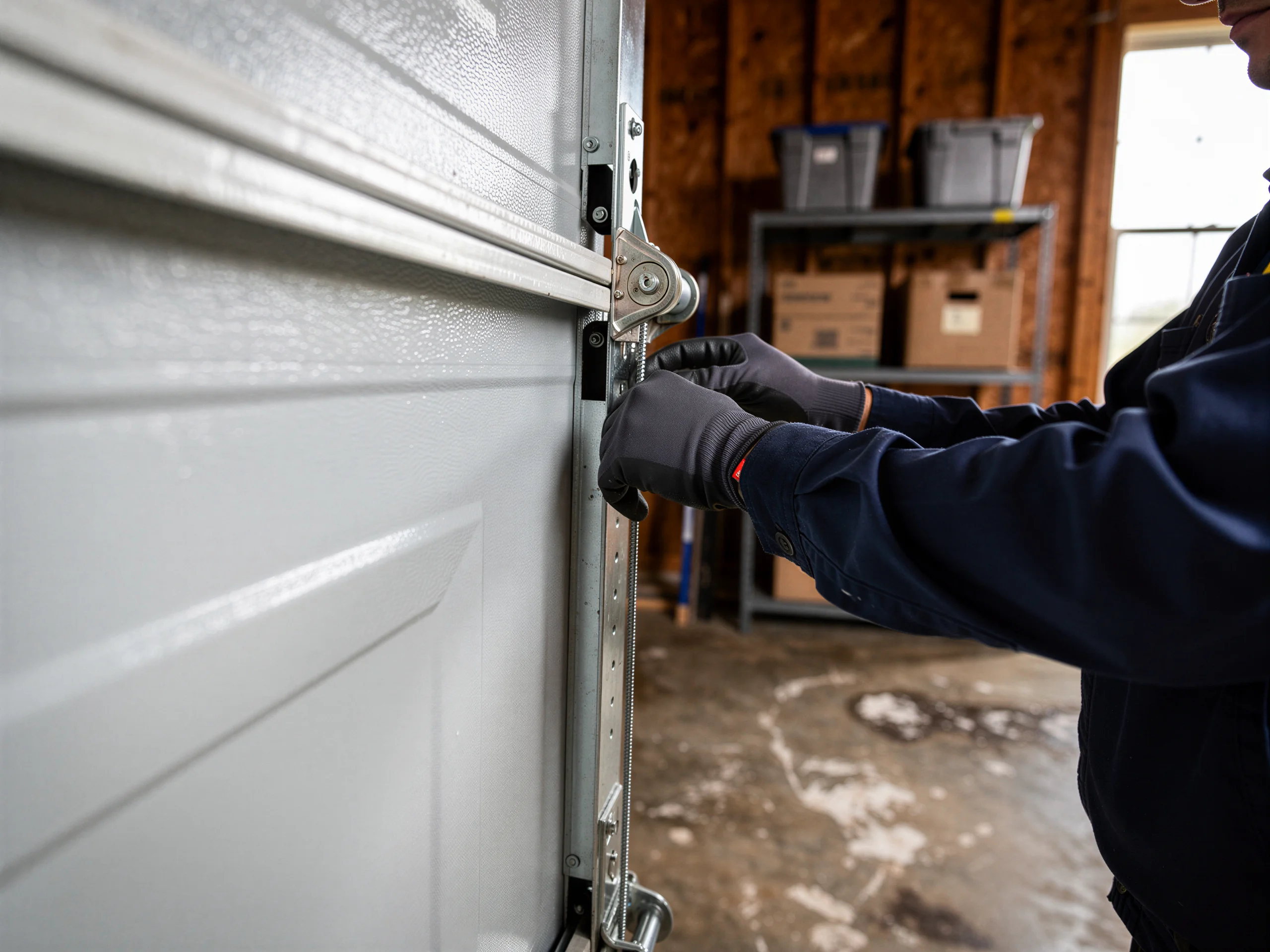
That's not a system you want to open up without the right bars and a clear idea of the spring's wind direction - a torsion spring under tension is the single most common way people get hurt trying to save a service call. Cables, bottom brackets, and anything holding tension are the same story: leave them alone.
What you can reasonably check yourself: the weatherstripping along the bottom panel, whether the track is visibly bent or pulled from the wall, and whether the opener's safety sensors are aligned and clean. If the door reverses randomly or won't close at all, that's often a sensor issue, not a spring issue, and it costs nothing to check before you call.
Given the 17-mile trip out from Richmond, it's worth ten minutes of your own troubleshooting first - not because we mind the drive, but because a clear description of the fault means we show up with the right part the first time instead of a second trip.
Local causes
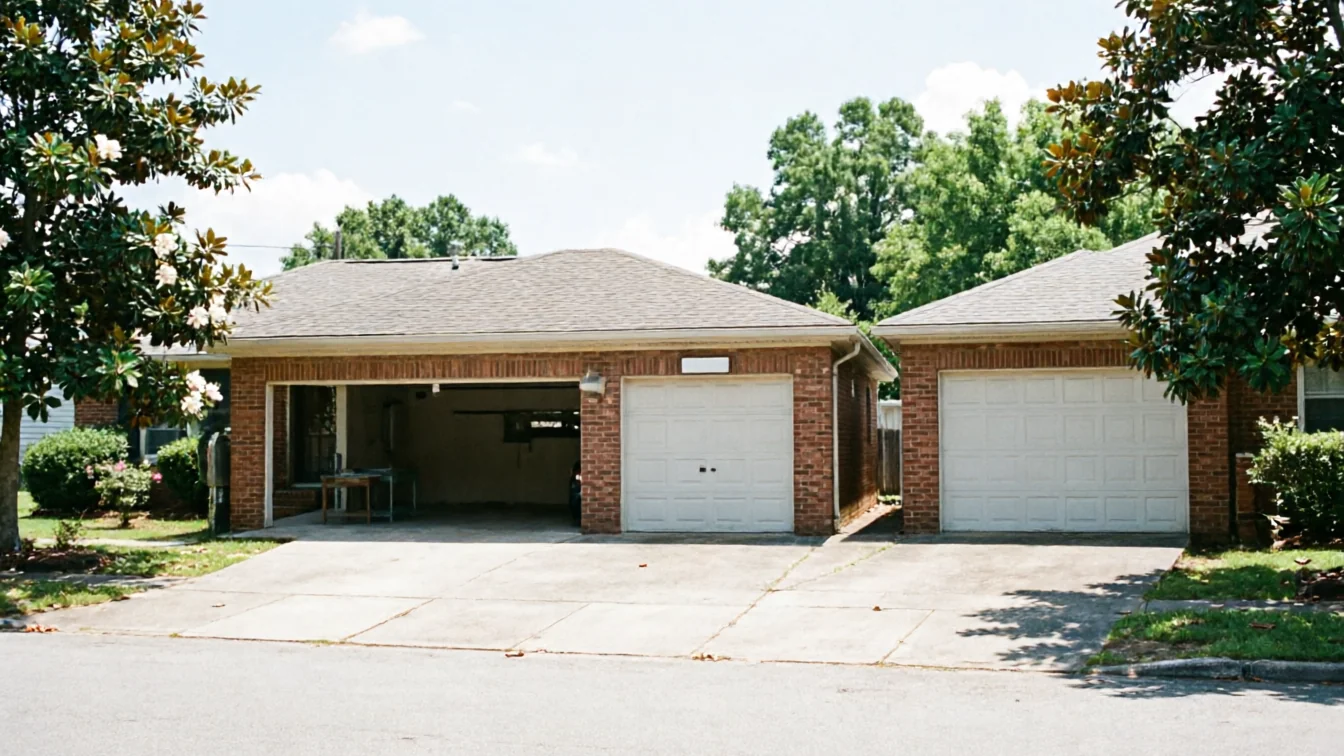
Most of Lancaster's housing stock dates to around 1969, part of a broader build-out across this area that ran roughly 1959 through 1988. Doors and openers from that era, or the first replacements installed on that era's framing, are now old enough that springs are past or near the end of their cycle life regardless of how little the door gets used. The climate here is the other half of it: this is a cold-climate zone with real winter severity, and cold metal doesn't flex the way warm metal does. A spring that's been fine all summer can snap on the first hard freeze because the steel's gotten brittle and the lift load didn't change. Garage doors on the north or shaded side of a house take this worse - the slab stays colder longer, and hardware mounted near it ages faster than you'd expect. None of this is unique to one house; it's a function of when this area got built and what it goes through every winter. That combination - 1960s-70s doors meeting a hard freeze - is the pattern behind most of the calls we get from this part of the service area.
Warning signs
On a door this age, failure usually isn't subtle. The most common call is a torsion spring that's let go outright - the door won't lift, or it lifts a few inches and stops, and you'll often hear the snap happen before that.
Second most common: a cable that's frayed or come off the drum, which shows up as the door hanging crooked on one side when it's partway open. Rollers original to a 1960s-70s door are usually steel, not nylon, and by now they're loud - grinding or squealing on the way up is often just worn rollers, not a structural problem, though it's worth checking before it gets worse.
Opener-side symptoms tend to be electrical rather than mechanical: a door that reverses before it touches the floor, or an opener that runs but the door doesn't move, which usually means the drive gear or chain has worn through, not the motor itself.
None of these are Lancaster-specific symptoms in themselves - they're what happens to hardware of this age in a cold climate, and they're what we expect to find before we open the truck.
On the truck
Because so much of the housing in this area dates to the same build window, we stock torsion springs and drums sized for 1960s-70s doors as our default inventory, not a special order. Standard-width torsion springs, common drum sizes, and the galvanized cable gauges that era used are on the truck before we leave Richmond. Where we run into limits: doors with non-standard track width, discontinued panel styles no longer made by the original manufacturer, or openers old enough that the circuit board itself is out of production. On those, we're honest about it - sometimes the fix is a universal opener replacement rather than a repair, and we'll tell you that on the phone rather than after a wasted trip. Given the distance out to Lancaster, we try to confirm spring size and opener brand before we load the truck, since a second trip for the wrong part costs you time we'd rather spend fixing the door.
Downtime
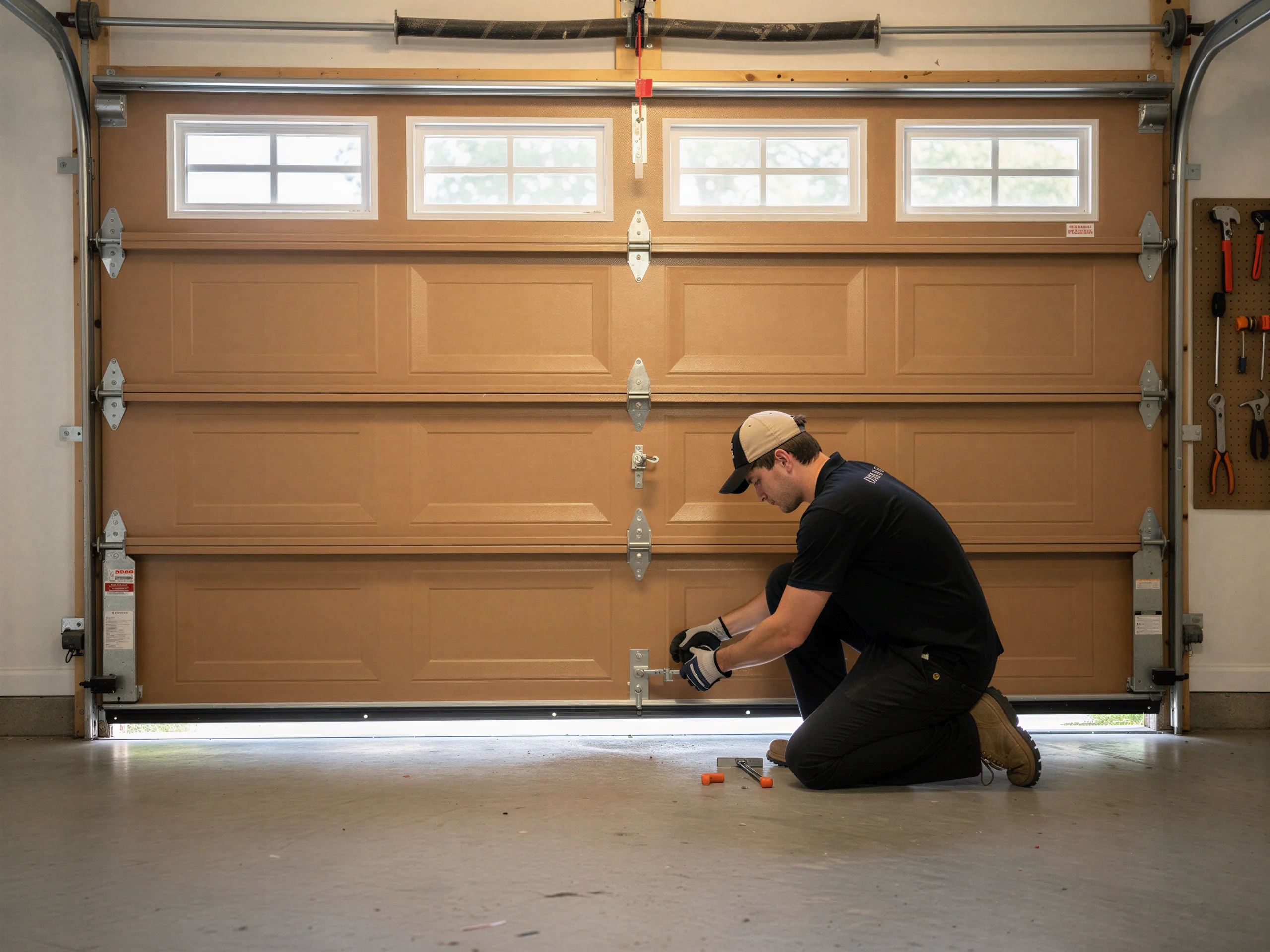
A standard torsion spring replacement on a door from this era is usually a same-visit fix once we're on site, assuming the drums, cables, and track are in decent shape underneath. Where it stretches out is parts we don't carry standard - a discontinued panel or an opener board that needs to be sourced, which can mean a second trip after the part comes in. Because the drive from Richmond is 17 miles each way, we'd rather diagnose accurately on the first call than guess and come back. If your door won't close and that's a security concern, say so when you call - a door that's stuck open is a different priority than one that's just noisy.
Questions
It doesn't take longer once we're there - it's the drive. Lancaster is 17 miles from our Richmond shop, so we schedule it as a dedicated trip rather than a stop between other jobs. Telling us the specific problem up front, not just "the door's acting up," helps us load the right parts and get it done in one visit.
Depends on the part that failed. Worn gears, chains, or sensors are usually repairable. If the circuit board itself is out of production, which happens on openers from the 1970s-80s building wave in this area, replacement is often more practical than chasing discontinued parts. We'll tell you straight which situation you're in.
Torsion springs have a rated number of open-close cycles, and most in this area are original to houses built around 1969 - well past a typical spring's working life. Cold weather makes it worse: brittle steel under the same daily load is far more likely to let go on a hard freeze than in summer.
We carry torsion springs, drums, and cable sizes common to the 1960s-70s doors that make up most of this area's housing stock, since that's the majority of what we're called out for. Non-standard track widths or discontinued panel styles sometimes need to be sourced, and we'll tell you that before we start the job, not after.
Explore more
Ready when you are
Richmond Garage Door Pros repairs and installs garage doors, springs and openers in Richmond, KY and the surrounding area.